
The question isn't really which litter box is better. It's which one you'll actually stay consistent with.
Litter box hygiene is one of the most underestimated parts of cat parenting. A neglected box — even for a day — causes measurable stress in cats, contributes to avoidance behaviour, and fills your home with ammonia odour far faster than most people expect. The technology inside the box matters less than the system you build around it.
With that as the lens, here's an honest breakdown of automatic (self-cleaning) versus manual cat litter boxes — written for Indian cat parents navigating real apartments, real schedules, and real cats.
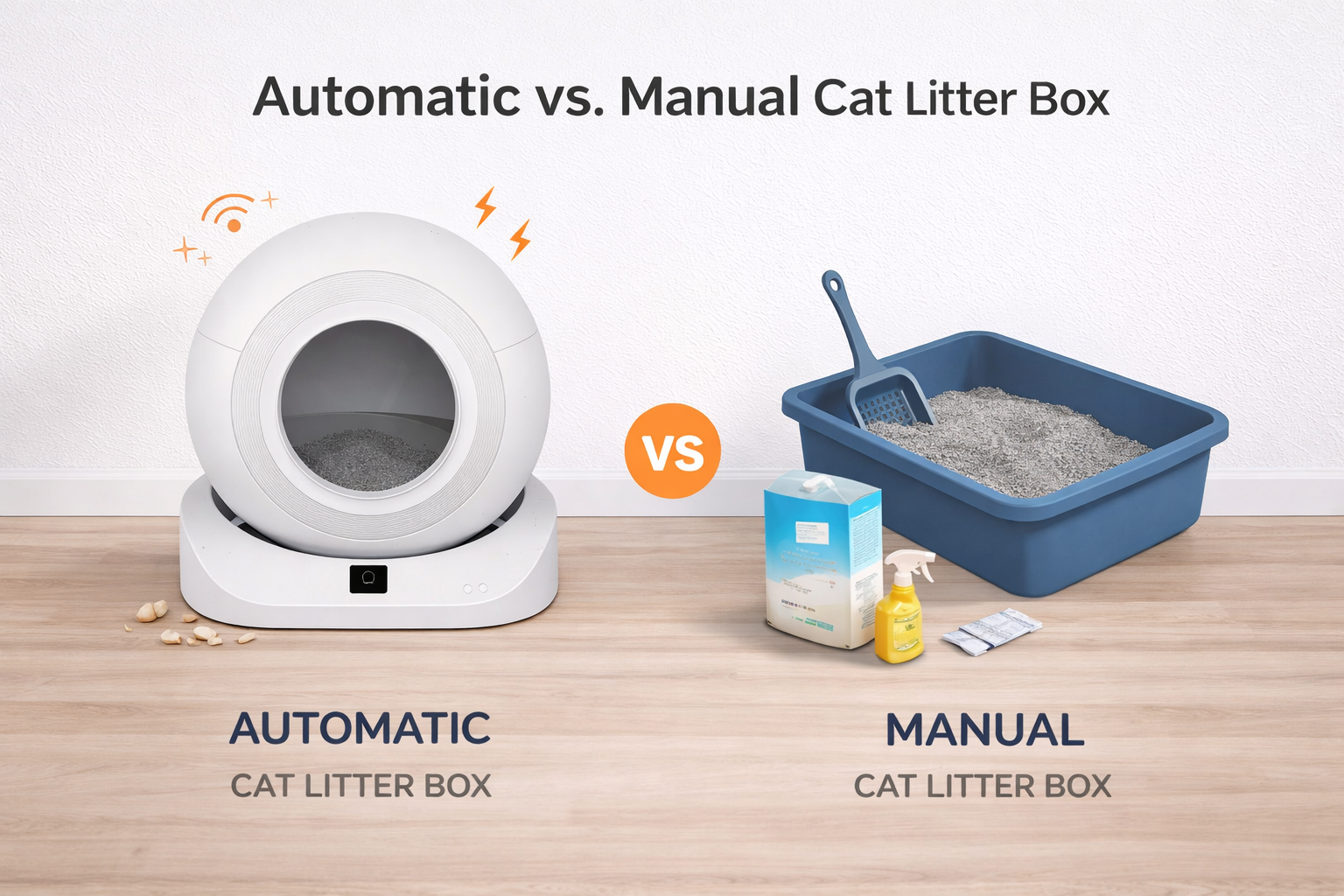
Manual litter boxes are a tray filled with litter that you scoop by hand, typically once or twice a day. Some have hoods for privacy and containment; others are open-top. Everything depends on your routine.
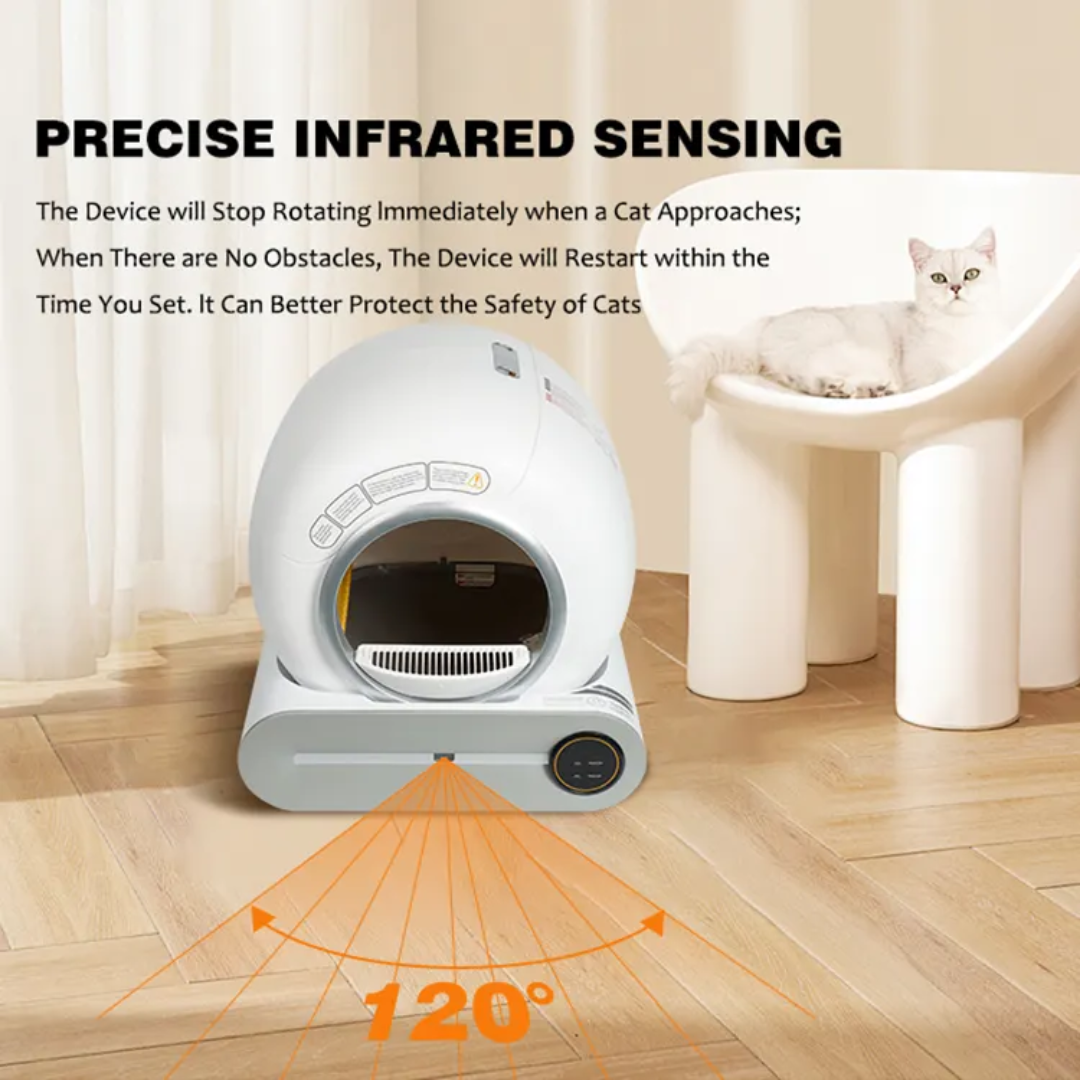
Self-cleaning litter boxes use sensors to detect when your cat exits, then automatically rotate, rake, or sweep waste into a sealed compartment. Higher-end models — like the Kipenzi Smart Litter Box — connect to an app, track bathroom habits over time, and alert you when the waste drawer needs emptying, usually every 7 to 15 days depending on how many cats you have.
The core difference isn't just convenience. It's the frequency and reliability of waste removal — and that has downstream effects on odour, hygiene, and even your cat's health signals.
Manual scooping takes 5–10 minutes, twice a day. That's 60–120 hours a year — roughly five full working days spent at the litter box. If your schedule is consistent and that routine feels manageable, a manual box works well. If you travel frequently, have long working hours, or find yourself skipping cleanings during hectic weeks, that inconsistency shows up immediately in your cat's comfort and your home's smell.
With a self-cleaning box, you're emptying a sealed waste drawer once every 1–2 weeks. Daily effort drops close to zero. But you're also managing a device — the right litter type, periodic deep cleaning of the barrel, and occasionally troubleshooting connectivity.
Neither option is effortless. The question is which effort pattern you'll actually sustain.
This is where automatic boxes have a structural advantage that's easy to underestimate.
The primary source of litter box odour isn't the litter — it's decomposing waste sitting in open air. Every hour that clumps sit uncovered, ammonia concentrations in the surrounding area rise. In a 2BHK or 3BHK apartment where the litter box sits in a bathroom near living spaces, this matters more than most cat parents realise until it's already a problem.
A self-cleaning box removes waste within minutes of your cat finishing, seals it in a covered drawer, and in advanced models uses UV sterilisation or ionic deodorisation to further neutralise what remains. A well-managed manual box with twice-daily scooping and a quality clumping litter performs adequately — but a single missed day is immediately noticeable, especially in smaller homes.
The sticker price gap is real. A decent manual litter box costs ₹500 to ₹2,000. A quality self-cleaning litter box in India ranges from ₹12,000 to ₹25,000.
But the full cost picture is more nuanced than most people calculate.
Manual boxes consume more litter over time. When waste sits in the tray for hours, urine spreads through surrounding granules and saturates more litter than necessary. Self-cleaning boxes remove waste quickly, keeping unused litter dry longer — reducing how often you need to top up or fully replace. Over a year, this partially offsets the price difference.
There's also the vet angle. Self-cleaning boxes with health monitoring track your cat's bathroom frequency and weight over time. A sudden spike in visit frequency can signal a UTI or early kidney issue days before visible symptoms appear. Catching something early means less expensive treatment — a benefit that doesn't show up on a price chart but is genuinely real.
This is where many buyers are caught off guard.
Cats are sensory-cautious creatures of habit. A self-cleaning box that suddenly moves and produces a mechanical sound can startle even a confident cat. Some cats refuse to use it. Others need weeks to adjust. This isn't a dealbreaker, but it's a risk worth planning for.
The standard approach that works: place the automatic box next to your cat's existing box and leave both running. Let your cat explore it without pressure. Remove the old box only once you've seen your cat use the new one consistently — usually two to three weeks.
Kittens under three months are generally not suited for self-cleaning boxes. Weight sensors may not register them reliably, and the mechanical movement during the sensitive early stages of litter training can create lasting avoidance.
The calculation shifts quickly with more than one cat.
A single manual litter box serving two cats should ideally be scooped three to four times a day to stay genuinely clean. With three cats, the standard guidance is one box per cat plus one — meaning three to four manual boxes, each needing daily attention. In practice, most cat parents don't sustain this, and it shows.
A quality self-cleaning box can serve up to five cats, removing waste automatically after each visit. For multi-cat households in Indian apartments where both space and time are limited, this is a practical advantage that compounds daily.
Power dependency. Self-cleaning litter boxes run on electricity. If you're in a city with frequent load shedding, verify that your model includes a failsafe that pauses safely mid-cycle without leaving the mechanism stuck. Most quality models handle this well, but it's worth confirming before purchase.
Litter compatibility. Automatic boxes require clumping litter — bentonite or plant-based (tofu). Non-clumping litter, silica gel crystals, and sand-type litters will jam the mechanism. If your cat currently uses a non-clumping variety, switching litter is a prerequisite, not an optional upgrade.
Apartment odour dynamics. In homes under 900 sq ft, air circulation between rooms is limited and odour from an unscooped manual box travels fast. The sealed waste compartment of an automatic box makes a meaningful difference in this context — not a luxury, but a hygiene baseline.
A manual litter box with a committed cleaning routine and good clumping litter does the job well. A self-cleaning litter box with the right litter, a patient transition period, and a cat who accepts it does the job exceptionally well — with far less daily effort, better odour management, and passive health monitoring built in.
The most useful question to ask yourself before deciding: On your worst, most exhausted week, will you still scoop consistently?
If yes, a manual box is completely sufficient. If the answer wavers, an automatic system isn't laziness — it's a more reliable infrastructure for your cat's actual wellbeing.
For cat parents with two or more cats, unpredictable schedules, or persistent odour issues in apartment living, yes. The daily time saved and improved hygiene typically justify the cost over 12–18 months. For a single cat with a consistent cleaning habit, a manual box with quality clumping litter works well at a fraction of the price.
No. Self-cleaning boxes require clumping litter — bentonite or plant-based (tofu). Non-clumping litter, silica gel, and crystal litter are not compatible and can damage the mechanism.
Some cats are initially hesitant, particularly if they're sensitive to noise or movement. A gradual transition — placing the automatic box alongside the existing one for 2–3 weeks — resolves this for most cats. Kittens under three months are generally not recommended for self-cleaning boxes.
Typically every 7–15 days for a single cat, depending on waste bin capacity. The Kipenzi Smart Litter Box has a 9L waste bin designed to handle up to 15 days without emptying for one cat.
Yes — weight sensors detect gradual changes that may signal illness, and usage frequency tracking can flag early signs of UTIs or bladder issues through unusual visit patterns. It doesn't replace a vet, but it gives you an early signal worth acting on.
Quality models include failsafes that pause the cleaning cycle safely and resume once power is restored, preventing the mechanism from getting stuck mid-rotation. Always confirm this feature before purchase — especially important for Indian households.